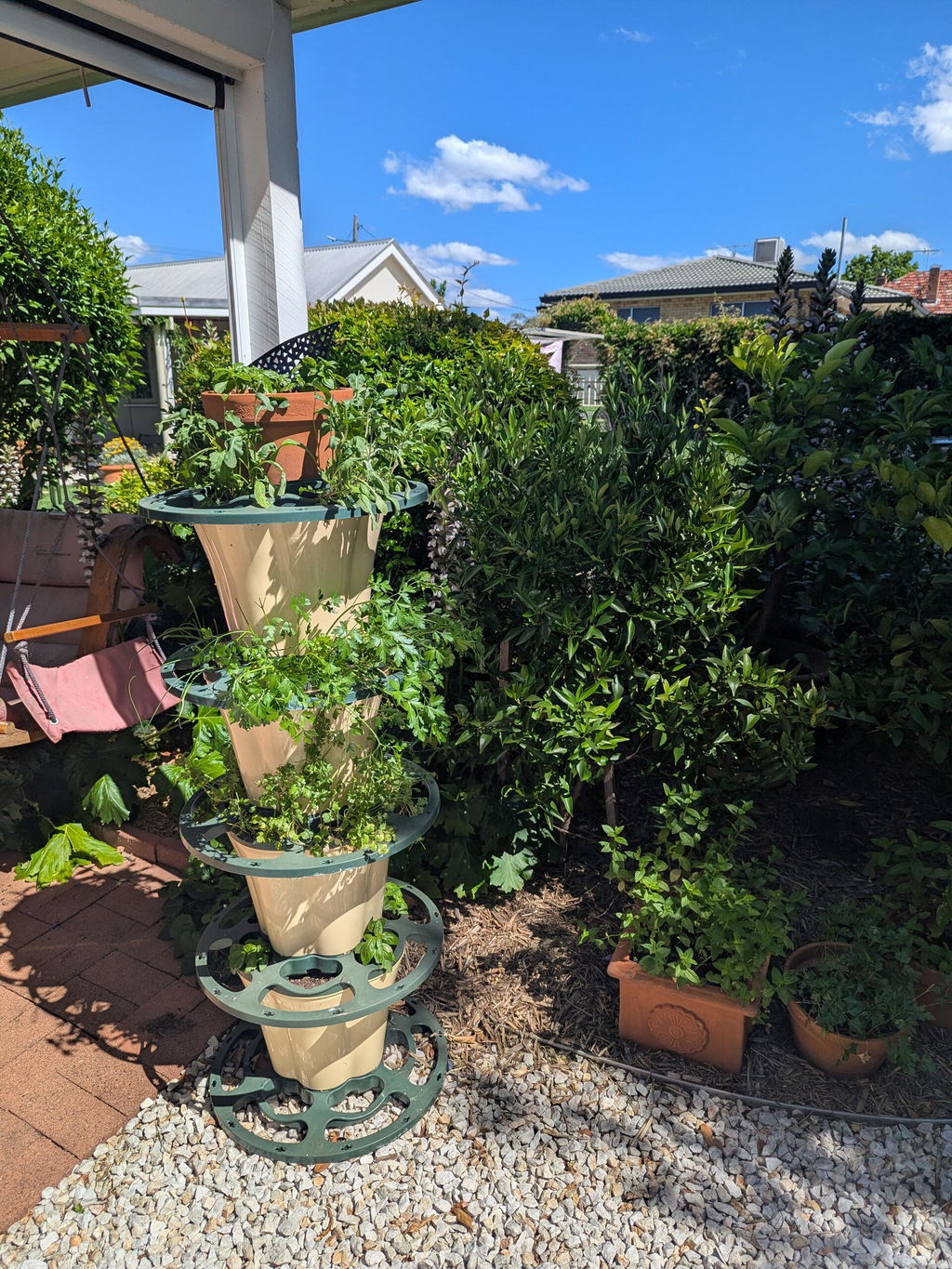
Aquaponics with VERTI-POTS™
See how we combine fish and vertical towers to grow more food in a small space with fewer inputs.

See how we combine fish and vertical towers to grow more food in a small space with fewer inputs.

Aquaponics is a growing system that links fish and plants in one closed-loop water cycle, where fish waste becomes fertiliser for the plants and the plants clean and return the water to the fish.

A 250L fish tank sits at one end of the row and feeds the eight VERTI-POTS™ towers.

A submersible pump in the tank sends water along the pipe above the towers.

Above each tower, a small outlet lets water drop into the top pot.

Water trickles down through the towers, feeding the plants as it goes.

Water drains into a shallow trough that slopes back to the tank, closing the loop.

VERTI-POTS™ towers are already designed around moving water from the top to the bottom in a simple, controlled way. That makes them a natural fit for aquaponics, where you want fish water to pass through plant roots, deliver nutrients and then head back to the tank cleaner than it started.
Fish are the engine of an aquaponics system – they supply the nutrients that keep your VERTI-POTS™ towers growing. The goal is to pick hardy species, give them a stable home and keep an eye on them like you would any other pets.


See our full gallery to get ideas of what to grow.


Aquaponics is a closed-loop growing system where fish and plants share the same water. Fish live in a tank and produce waste, bacteria convert that waste into nutrients, and water is pumped up to your VERTI-POTS™ towers. The plants take up those nutrients as the water trickles through the pockets, and cleaner water flows back to the tank for the fish.
Yes. The physical tower stays exactly the same. Instead of watering with a hose or watering can, you feed fish water into the top pot from a tank and pump. As long as the pots are filled with free-draining media (not soil) and the tower can drain back to the tank, it will work in an aquaponics line.
You can do either. In aquaponics, nutrients come from fish waste. In hydroponics, the tank holds water and dissolved nutrient mixes instead of fish. The towers, pump and plumbing are essentially identical. We like fish because it is a living, organic system, but the same VERTI-POTS™ setup can be run as hydroponics if you prefer.
Many home systems start with a tank or sturdy tub around 200–300 litres and one VERTI-POTS™ tower. Begin with a modest number of hardy fish, such as goldfish, and let the system settle before adding more. It is better to slightly understock at first and increase fish numbers once you are confident managing water quality.
Aquaponics is a step up. You are looking after fish and water quality as well as plants. You will need to feed the fish, keep the pump running and use a simple test kit now and then. If you are new to growing, it is best to start with VERTI-POTS™ and potting mix, then move into aquaponics once you are comfortable with planting, watering and harvesting in towers.
Most leafy greens and herbs do very well, including lettuces, Asian greens, basil, parsley and coriander. Tomatoes, beans and other fruiting crops can also thrive once the system is established. As with soil growing, it is smart to start with easier, fast-growing plants and then experiment with heavier feeders like tomatoes, zucchinis or corn.
In a well-balanced aquaponics system the fish waste, once processed by bacteria, should supply most of what the plants need. Some growers add small supplements (for example, trace elements) if tests show a specific deficiency, but you are not routinely adding traditional fertilisers. The core idea is that the fish feed the plants and the plants clean the water for the fish.
If the pump stops, water is no longer moving from the tank through the towers. In the short term, this is mainly a problem for the fish, because the water is not circulating and oxygen levels can drop. The plants will cope for a while like any other potted plants. It is important to fix pump or power issues quickly, keep a spare pump on hand if you can, and avoid stocking the tank more heavily than your backup plan can support.